
TWP 100 Series Rustic Deck Stain: A Kingsport Project Walk-Through
We get a lot of questions about deck stain choices in the Tri-Cities. With dozens of options on the market — Sherwin-Williams® SuperDeck®, Cabot, Penofin, Ready Seal, Behr, Olympic, and the list goes on — it's hard for homeowners to know what's actually going to hold up in East Tennessee humidity, freeze-thaw cycles, and pollen-heavy spring weather. We've settled on a small handful of products we trust. TWP is at the top of that list. And for the rare customer who wants the opposite of a matte penetrating stain — a furniture-grade finish with real sheen — see what happened when we put the most expensive deck stain on the market on a Piney Flats deck.
What Is TWP 100 Series?
TWP stands for Total Wood Protectant. The 100 Pro-Series is the oil-based, semi-transparent line — the one most professional deck stainers reach for when they want a stain that actually penetrates into the wood instead of sitting on top of it. It's manufactured by Gemini Coatings out of El Reno, Oklahoma and has been a quiet pro favorite for over 20 years.
Three things make TWP 100 Series different from most retail deck stains:
- It's a true penetrating oil. Unlike acrylic-modified deck stains that build a film on the surface, TWP soaks into the wood pores and seals from within. That means it doesn't peel or flake when it eventually weathers — it just fades, and you re-coat directly without scraping or stripping.
- Mold and mildew resistance. The 100 Pro-Series formula resists mold, mildew, UV graying, and water absorption — meaningful in East Tennessee where everything molds eventually. (TWP also makes a separate 1500 Series that carries an EPA wood preservative registration; the 100 Pro-Series is sold as a "Total Wood Protectant.")
- Real semi-transparent finish. Wood grain stays visible. You see the boards, not a layer of paint on top of the boards. For a homeowner who wants a stained-wood look (not a painted-deck look), that matters.
Why Rustic Was the Right Color for This Project
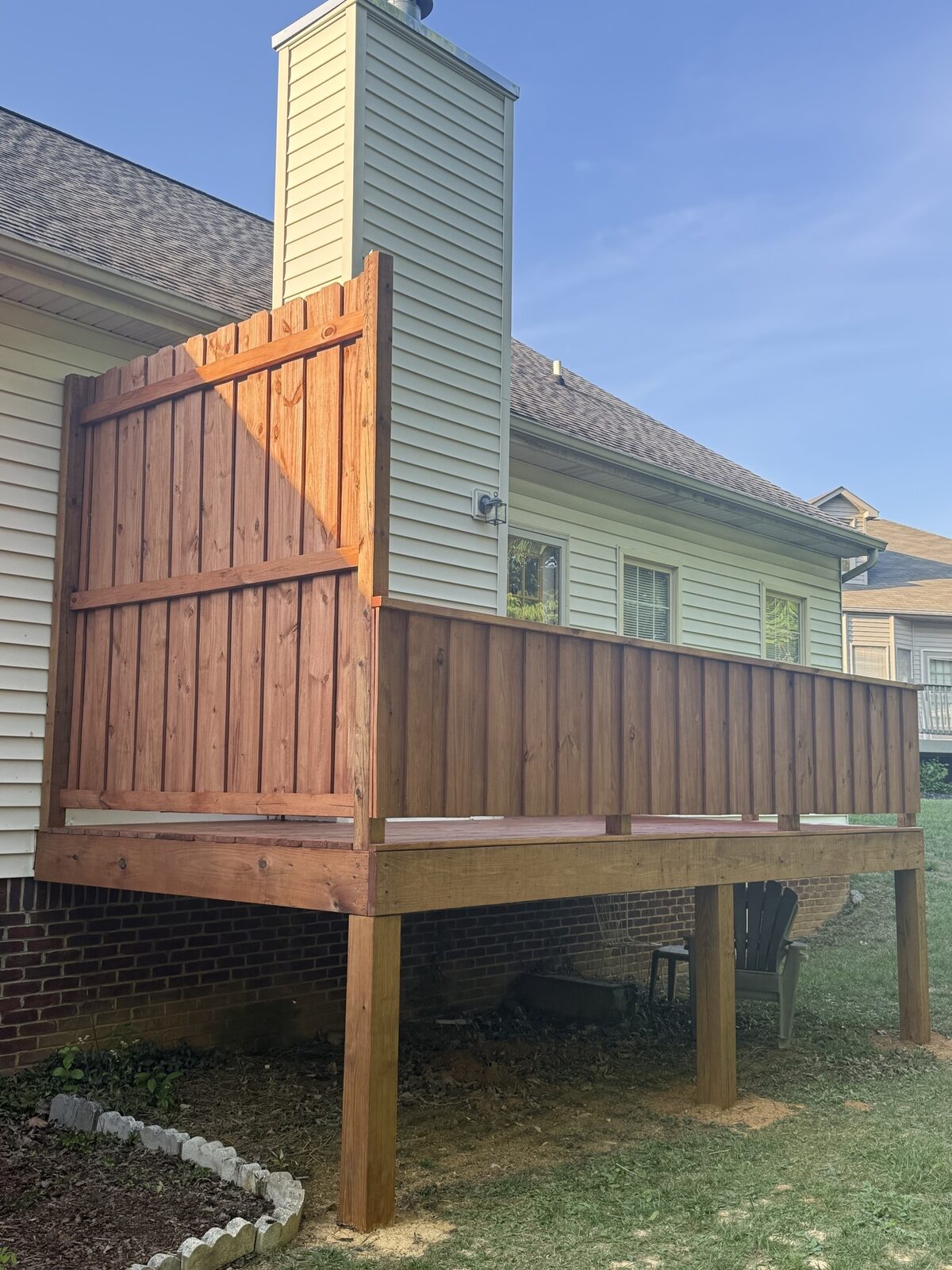
TWP 100 Pro-Series comes in nine colors: Clear, Cedartone, Redwood, Dark Oak, Cape Cod Gray, Prairie Gray, Honeytone, Rustic, and Pecan. Rustic sits in the middle of the lineup: a warm reddish-brown with enough red to look classic-cabin without going full cedar.
The Kingsport homeowner picked Rustic for three reasons:
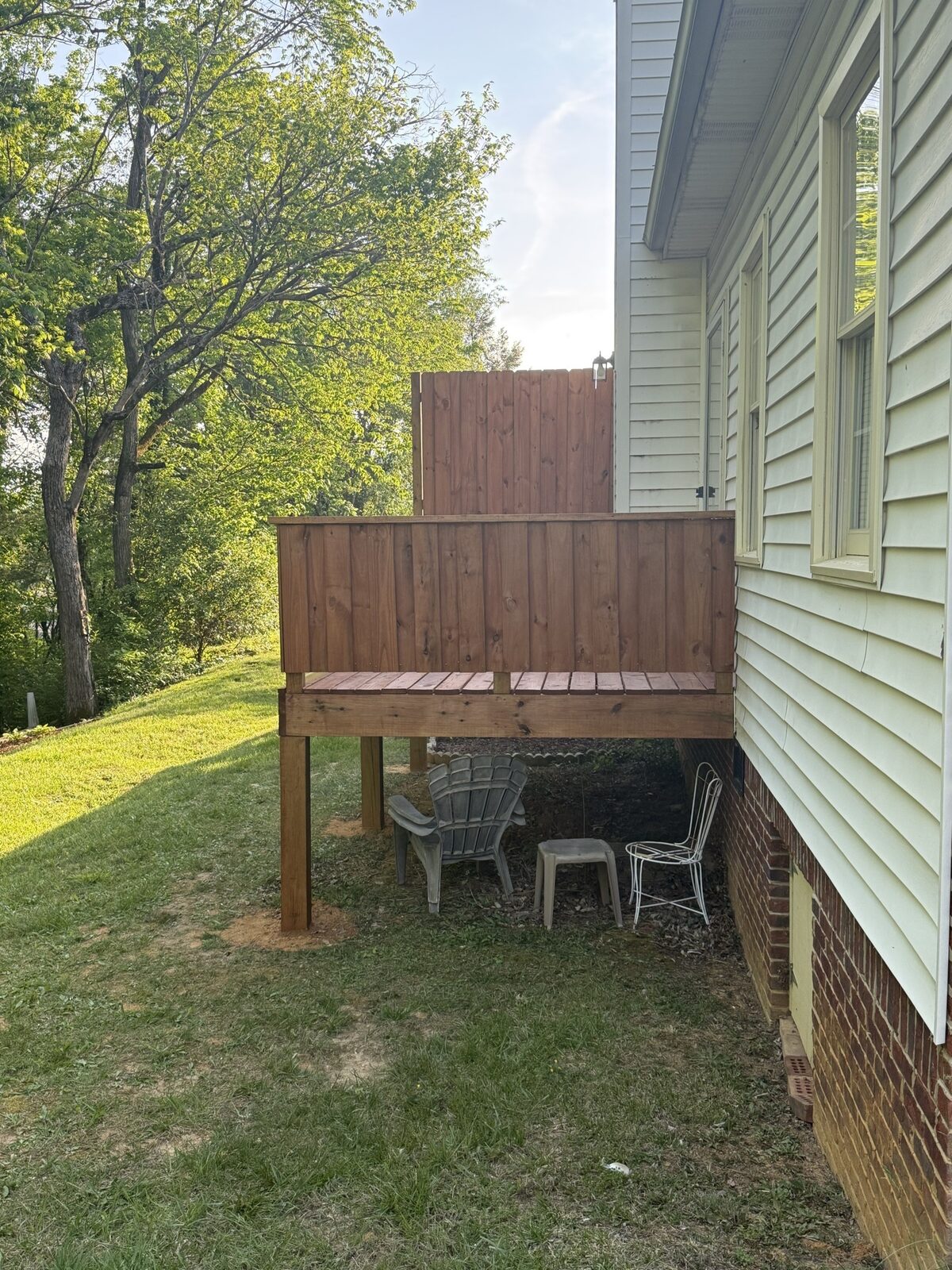
- It complemented the house. The home has cream/light siding with a brick foundation and white trim — Rustic adds warmth and contrast against the lighter siding without going so red that it fights any element.
- The pressure-treated lumber benefits from a warm stain. Pressure-treated wood often has a slight gray/green undertone from the treatment process. A warm reddish-brown stain like Rustic neutralizes that and brings the color back to a fresh, intentional warm tone.
- It hides minor wear. Lighter stains like Honeytone or Cape Cod Gray show every footprint, leaf shadow, and scuff mark. Rustic is forgiving in a real-use deck.
The Process We Used on the Kingsport Deck
Step 1: Clean and Neutralize
We don't pressure wash decks. Pressure washing fuzzes the wood grain, can force water deep into the boards, and damages soft wood like pressure-treated pine. Instead, we use an all-in-one deck preparation cleaner that chemically lifts mildew, surface gray, pollen, and old oxidation while staying gentle on the wood fibers. We apply it, let it dwell, then rinse.
Once the cleaner is rinsed, we follow with a neutralizer (oxalic acid-based wood brightener) that resets the wood's pH and lifts any remaining tannin discoloration. The wood comes out clean, neutralized, and ready to accept stain. This two-product prep approach is non-negotiable for older decks — TWP penetrates better into properly cleaned and neutralized wood.
Step 2: Wait Several Days, Then Check Moisture
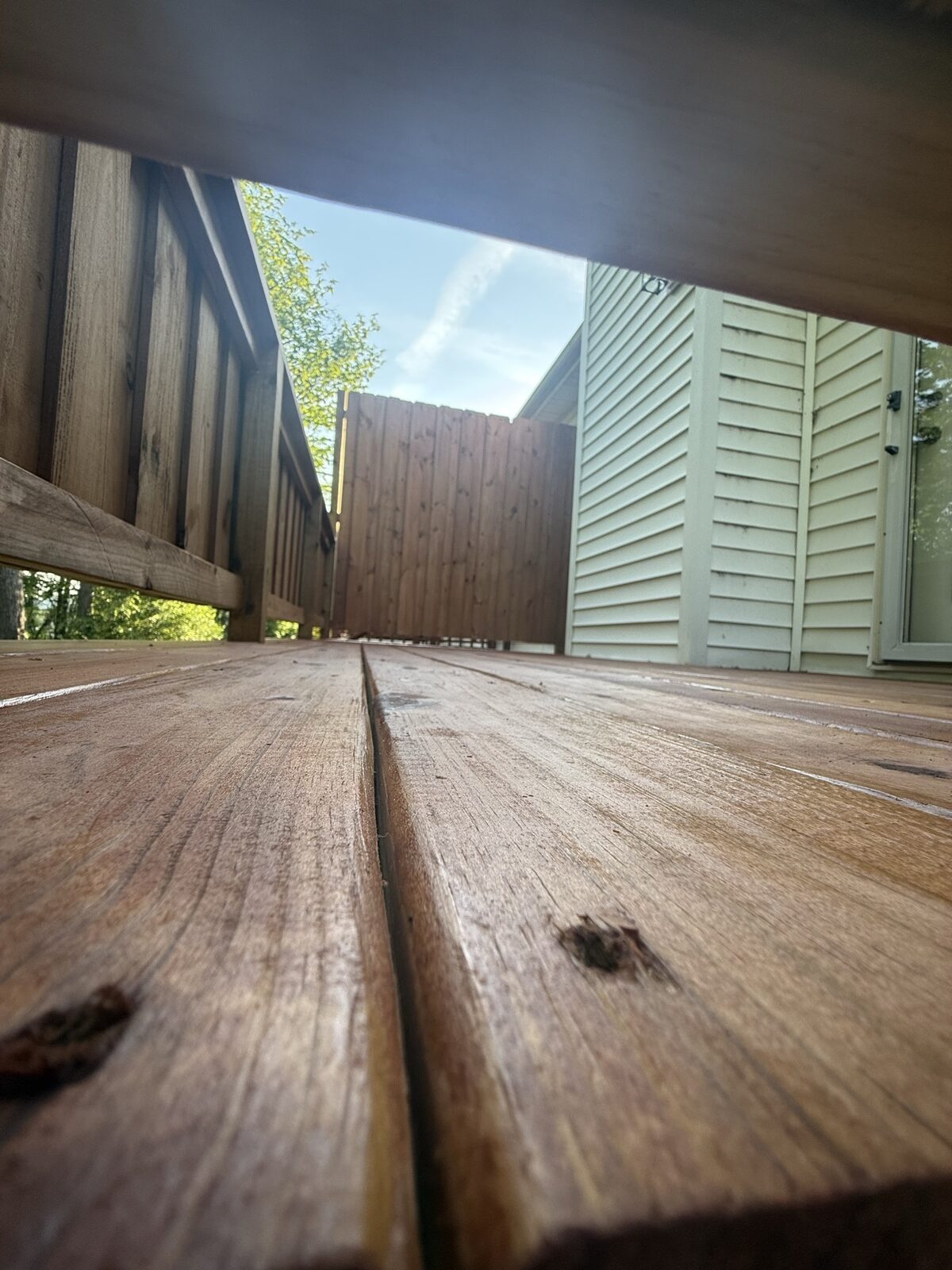
TWP 100 Series is oil-based. Oil and water don't mix. After cleaning and neutralizing, we give the deck several days to fully dry — typically 2 to 4 days depending on weather. Before opening the first can of stain, we check the boards with a moisture meter. Wood needs to be at or below 15% moisture content. Only when the meter reads green do we move on to staining. Skipping this check is the #1 reason a deck stain job fails early.
Step 3: Apply TWP 100 Series Rustic
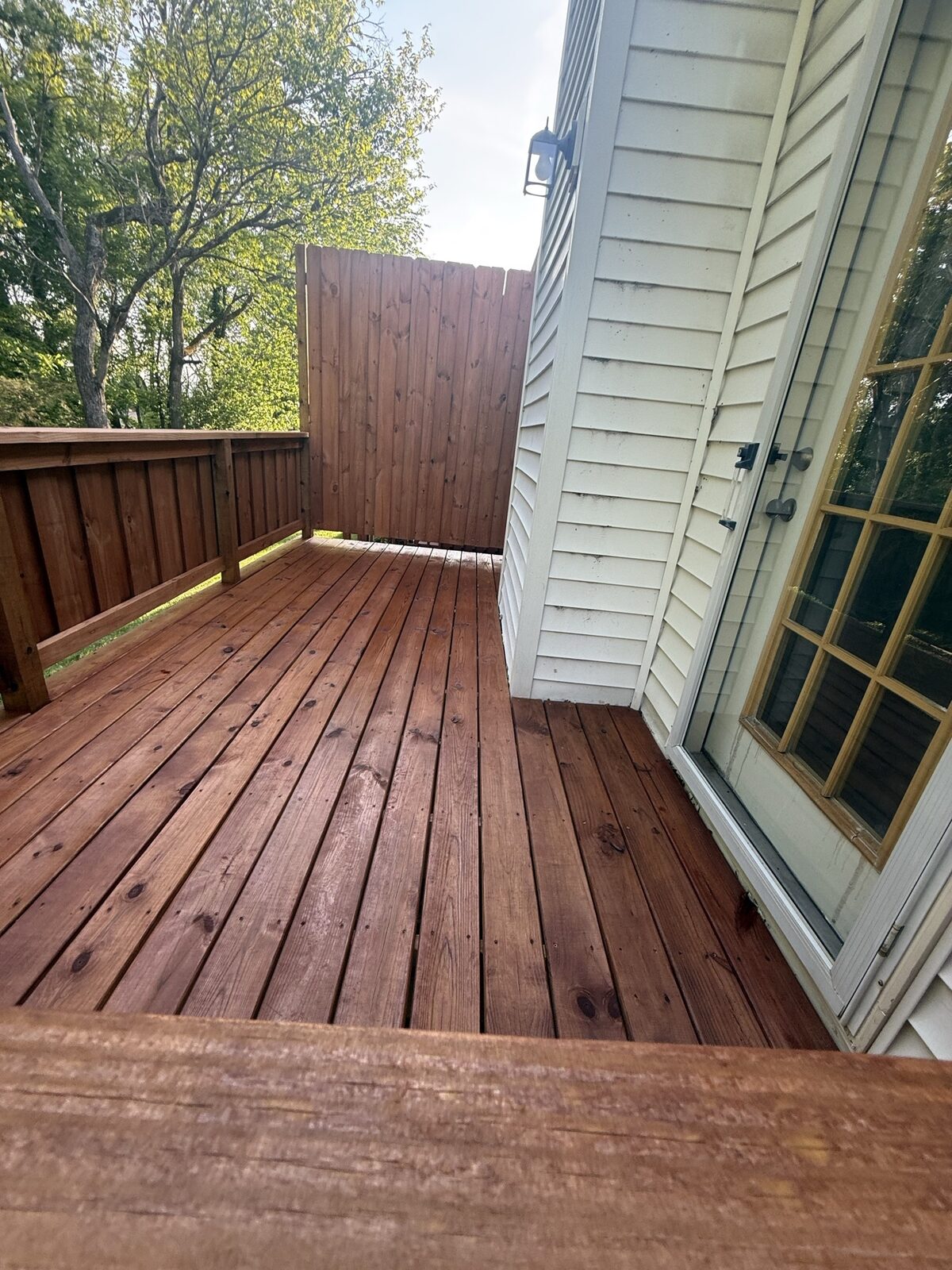
We applied TWP with a stain pad and brush combo, working in 3–4 board sections at a time to keep a wet edge and avoid lap marks. Per the manufacturer's TDS, after the first coat sits for 15–30 minutes, you check whether it has absorbed: if the wood took the first coat in within that window, you immediately apply a second coat wet-on-wet. If the first coat is still pooling on the surface after 30 minutes, you skip the second coat — the wood has taken all it can hold, and a second pass would just sit on top and get tacky.
On this Kingsport deck, the first coat absorbed within about 20 minutes (typical for older, dry pressure-treated boards), so we ran a second coat. Official TWP coverage is 150–400 sq ft per gallon depending on wood porosity; our Kingsport project landed near the middle of that range on the weathered boards.
Step 4: Wipe Excess
Per the TWP TDS, any excess stain that hasn't soaked in gets wiped off 30–60 minutes after the final coat with a clean rag. Excess oil that pools and dries on the surface will get tacky later — wiping prevents that and leaves only what the wood absorbed.
Step 5: Dry Time and Foot Traffic
The official TWP TDS calls for a minimum 24-hour air dry at 78°F and 50% relative humidity before normal use. East Tennessee's humidity is often higher than 50%, so we tell clients to plan for at least 24 hours and ideally 48 before walking on the deck regularly, and to hold off on putting back furniture, pots, and grills for at least 48 hours.
How Long Does TWP Last in East Tennessee?
On a horizontal surface (deck boards) in our climate, expect:
- Years 1–2: Full color, water beads off the boards, no maintenance needed.
- Years 2–3: Color starts to soften slightly. Still protective. Annual rinse with a soft brush keeps it looking fresh. This is when most horizontal deck surfaces get a maintenance coat — wash, neutralize, single re-coat of TWP. No stripping required because oil-based stains don't peel.
- Vertical surfaces (rails, posts, side walls): Typically 3–5 years between coats — roughly 1.5–2x the horizontal lifespan because they don't take direct sun and standing water.
Note: TWP doesn't guarantee a specific time interval — every climate, sun exposure, and traffic pattern is different. The numbers above are realistic East Tennessee field expectations; the manufacturer's own guidance is "apply color maintenance coats as needed."
Compare this to film-forming acrylic deck stains (Behr DeckOver, etc.) which can peel and require full strip and re-stain at 2–4 years. TWP's penetrating oil chemistry is what makes the long-term maintenance so much easier.
Where TWP Falls Short
We try not to oversell products. TWP 100 Series isn't perfect:
- Oil-based means stronger smell during application. Not as bad as old solvent stains, but more noticeable than waterborne products.
- Cleanup requires mineral spirits. Water won't work on brushes, pads, or spills. Plan accordingly.
- Won't fix structural issues. If your boards are split, cupped, or rotting, no stain — TWP or otherwise — will hide that. We'll always tell you up front if your deck needs board replacement before staining.
- Color choice is permanent for ~3 years. If you pick Rustic and want to switch to Cape Cod Gray next year, you'll need to wait through a fade cycle or strip the deck. We help every client pick a color they'll love long-term.
Get a Deck Staining Quote
Rock's Painting stains decks across the Tri-Cities — Kingsport, Johnson City, Bristol, Jonesborough, Elizabethton, and surrounding communities. We use TWP 100 Series, Sherwin-Williams® SuperDeck®, Flood Solid, and a few other proven products depending on the project. We'll evaluate your deck condition, recommend the right stain type and color, and give you an honest quote.
Request your free deck staining quote or call (423) 207-2347. See more deck staining work in our project gallery or read about deck staining costs in Kingsport.