
Painting Red Brick White with Romabio Masonry Flat: A Tri-Cities Before & After
Painting a brick house is one of the most dramatic exterior transformations available. The right product can turn a dated red-brick ranch into a clean, modern, sophisticated showpiece. The wrong product will flake off within a few years, trap moisture behind the film, and leave you with a worse problem than you started with. The brick painting category is unforgiving — the chemistry of the paint matters more than almost any other exterior project we work on.
For this project, we used Romabio Masonry Flat. Here's why, what the product is, our process, and how the project came out.
Before: Red Brick, Ready for a Transformation
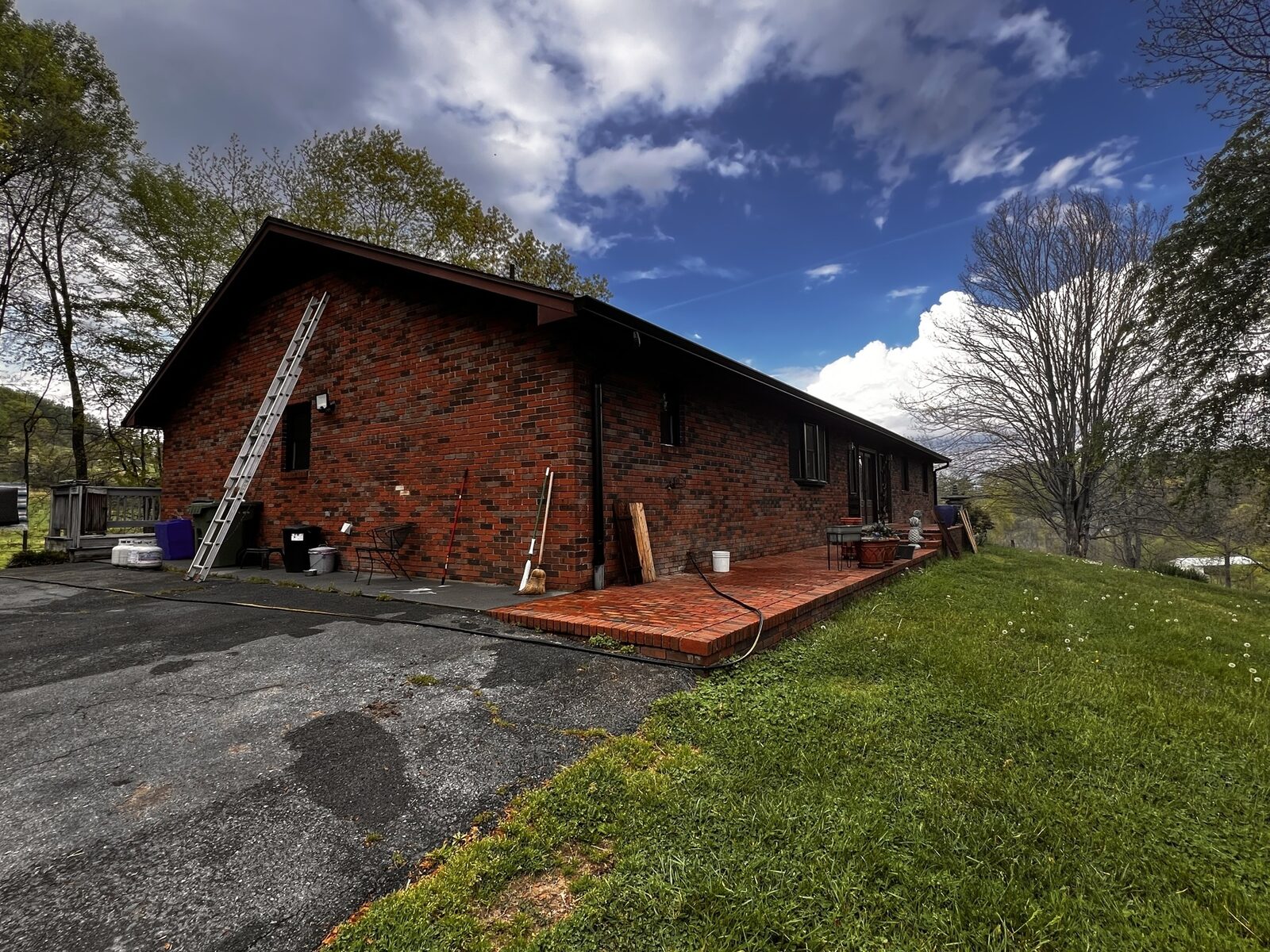
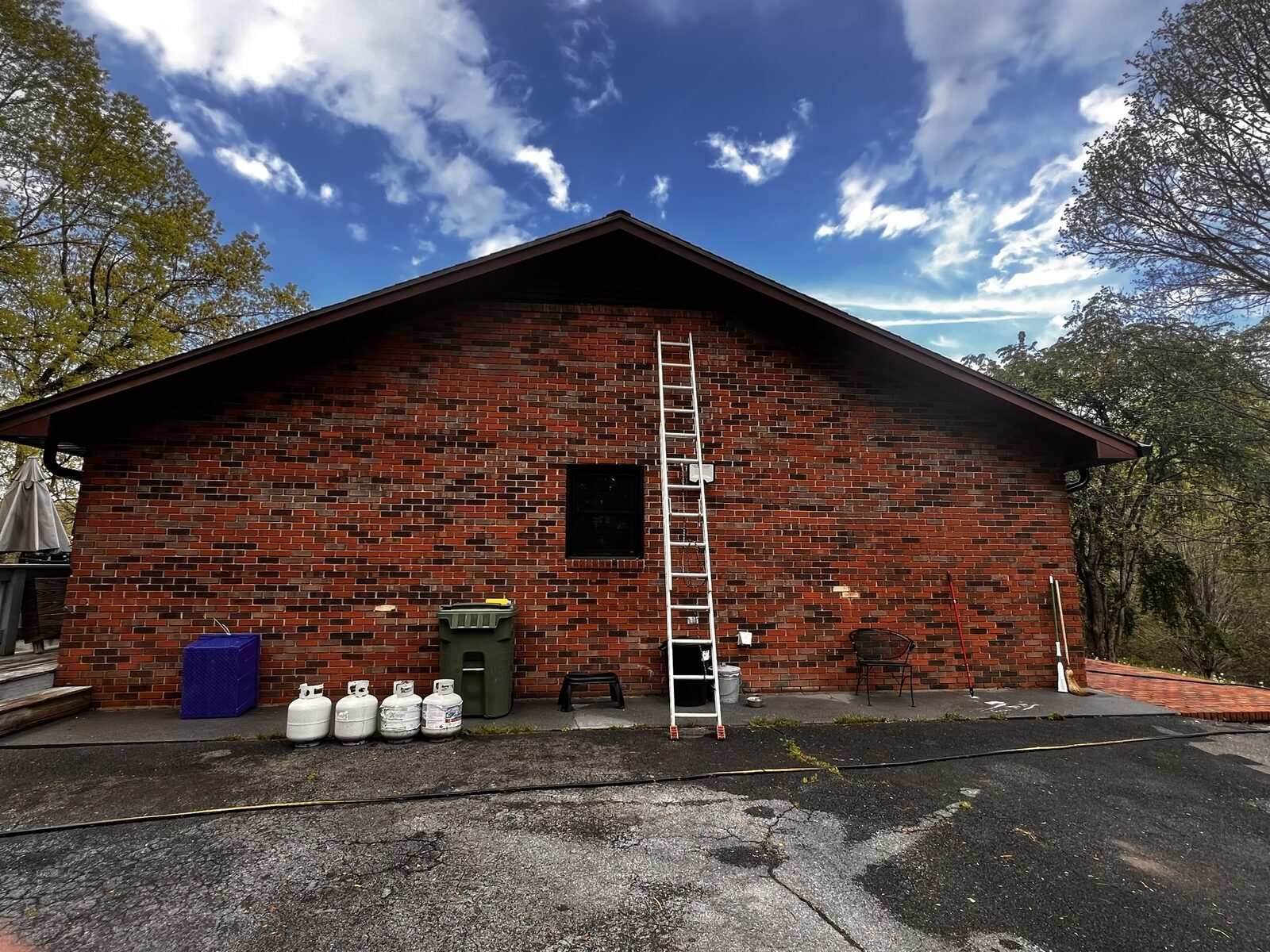
Two things matter when you're evaluating a brick house for painting: condition and history. Romabio Masonry Flat is formulated for unpainted, absorbent brick. The mineral binder needs to penetrate into the brick's pores to chemically bond with it. Brick that's already been painted with conventional acrylic latex needs a different prep path (Romabio's MicroGrip Primer) before the mineral paint can be applied, and even then, the long-term performance is best on virgin brick.
On this house, the brick was original to the home, never painted, and in solid shape — exactly the right candidate.
Why Romabio Masonry Flat Specifically (vs Acrylic Latex)
Most paint brands sell a "masonry paint" that's just acrylic latex with slightly different additives. They form a film on the surface of the brick — paint that's mechanically glued in place, sitting on top of the masonry rather than being part of it. That film looks great for a few years, but it has two big problems on real-world brick:
- Trapped moisture leads to brick spalling. Brick is porous and naturally cycles water vapor in and out as humidity and temperature change. Standard exterior acrylic latex reduces vapor transmission by 60–90% — it essentially seals the brick. Moisture that gets behind the film (through mortar joints, capillary action, or interior humidity) has nowhere to go. In freeze-thaw cycles, that trapped water freezes, expands, and pops the brick face off. Masonry pros call it spalling, and it's well-documented in building-science literature as one of the fastest ways to permanently destroy a brick wall.
- Once you paint brick with acrylic, you can't go back. Brick is porous; the paint penetrates into the surface pores. Stripping is partial at best — you can't fully remove it without damaging the brick face. The only practical maintenance path is to keep painting over it every 5–10 years (sometimes sooner in harsh exposures).
Romabio Masonry Flat is fundamentally different chemistry. It's a potassium-silicate mineral paint. Instead of forming a film, the silicate binder chemically reacts with the calcium and silica in the masonry — a process called silicification or petrification. The paint doesn't sit on top of the brick. It becomes part of the brick's surface mineralogy through covalent bonds at the molecular level. There is no discrete film to release, so it cannot peel.
This isn't a new invention. The mineral silicate paint category goes back to 1878, when German chemist Adolf Wilhelm Keim patented the first formula. Original Keim facades from the 1890s in Switzerland, Norway, and Germany are still intact today — over 130 years later. Romabio is the Italian brand most commonly distributed in the US (sourced from the Dolomites, made in Italy); KEIM and BEECK, both German, are the other major silicate brands you'll see in the US market.
For the record: we use both Romabio and Keim regularly, and we love both products. They share the same fundamental silicate chemistry, both come with strong long-term warranties, and both are top-tier choices for unpainted brick or masonry. The customer picked Romabio for this specific project — either would have delivered the same kind of long-term result. The only reason a contractor might lean one way or the other on a given job comes down to color availability, local distribution, or specific substrate compatibility. You can't go wrong with either one.
Practical implications for an East Tennessee homeowner:
- Breathable. Romabio publishes a 300+ perm rating for Masonry Flat — well into "open to vapor" territory. Peer-reviewed comparisons of historic-facade paints show silicate's vapor permeability matches the substrate itself, so moisture diffuses outward unimpeded.
- No peeling or flaking. Because there's no film, there's nothing to peel. The paint fades over decades, but it doesn't fail catastrophically the way acrylic does.
- Freeze-thaw resilient. No trapped moisture means no spalling damage. The brick continues to do what brick has done for centuries — cycle water vapor naturally.
- 20-year limited warranty. Romabio publishes a 20-year limited warranty against peeling and blistering when applied per spec (two coats, surface prep per the TDS). Compare to typical acrylic masonry paint's 5–10 year repaint cycle.
- Truly flat, matte finish. Looks like the brick is just naturally that color, not painted. Modern aesthetic without the "painted brick" plastic look.
Our Process on This Project
Step 1: Clean the Brick Thoroughly
Per Romabio's spec, the brick has to be free of dirt, mildew, loose mortar, efflorescence, and any surface contamination. We pressure washed the brick — and unlike with stain on wood (where pressure washing fuzzes the grain), brick can take pressure washing well as long as the mortar joints are sound. We used a masonry-appropriate cleaner to address mildew and biological growth where present, then thorough rinse.
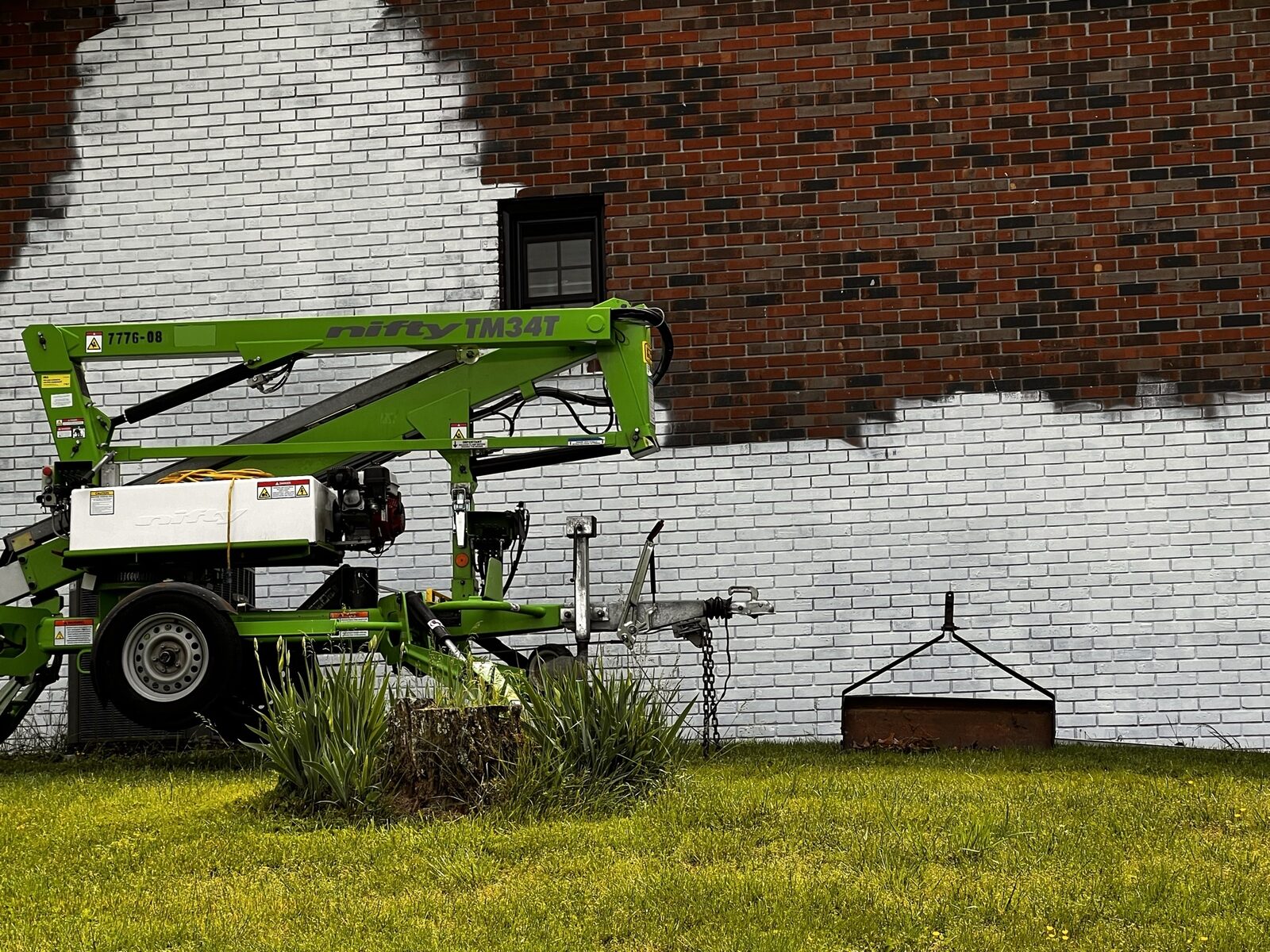
Step 2: Dampen the Brick (Same Day)
This is a critical step that most homeowners don't realize. Per Romabio's instructions: pressure wash and paint on the same day, because the masonry must be dampened. Dry brick won't accept the mineral paint properly — the silicate binder needs the slight moisture to facilitate the chemical bond with the masonry. We worked in sections, keeping the brick lightly damp ahead of the application.
Step 3: Apply Two Coats (Per Spec)
On unpainted masonry, Romabio specs two coats of Masonry Flat after appropriate dilution. We applied with a combination of brush (for joints and detail) and airless sprayer with a 0.019–0.021" tip per Romabio's recommendation. Coverage works out to roughly 250–325 sq ft per gallon depending on brick porosity. Even, methodical work — keeping a wet edge and avoiding lap marks even on a flat finish.
Step 4: Trim, Doors, and Details
Window frames, door surrounds, soffits, and any non-masonry details get a different product — Romabio Masonry Flat is specifically for the masonry surfaces. We typically pair it with a premium 100% acrylic for trim work, in a color that complements the brick paint color the homeowner picked.
After: The Finished House
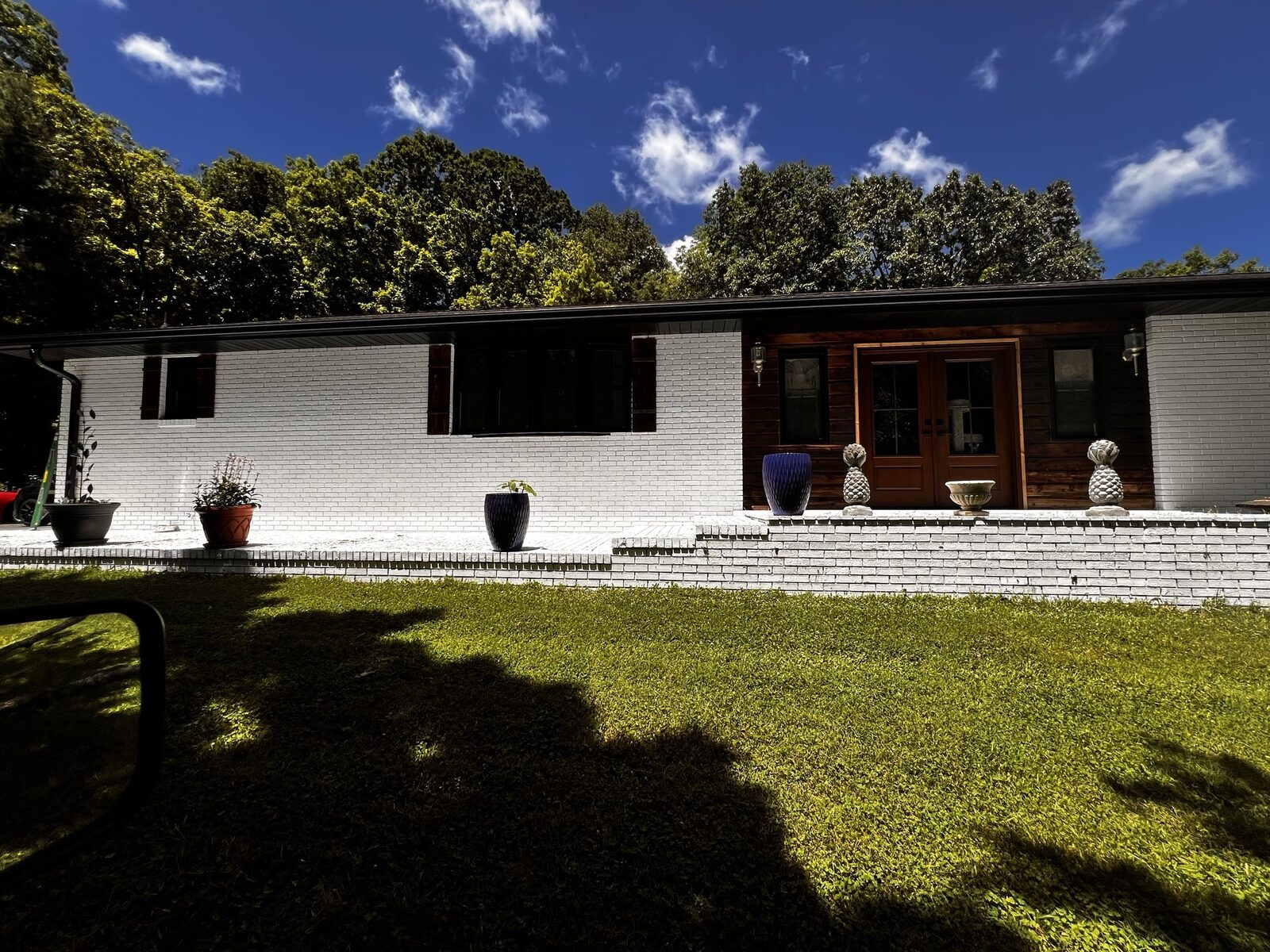
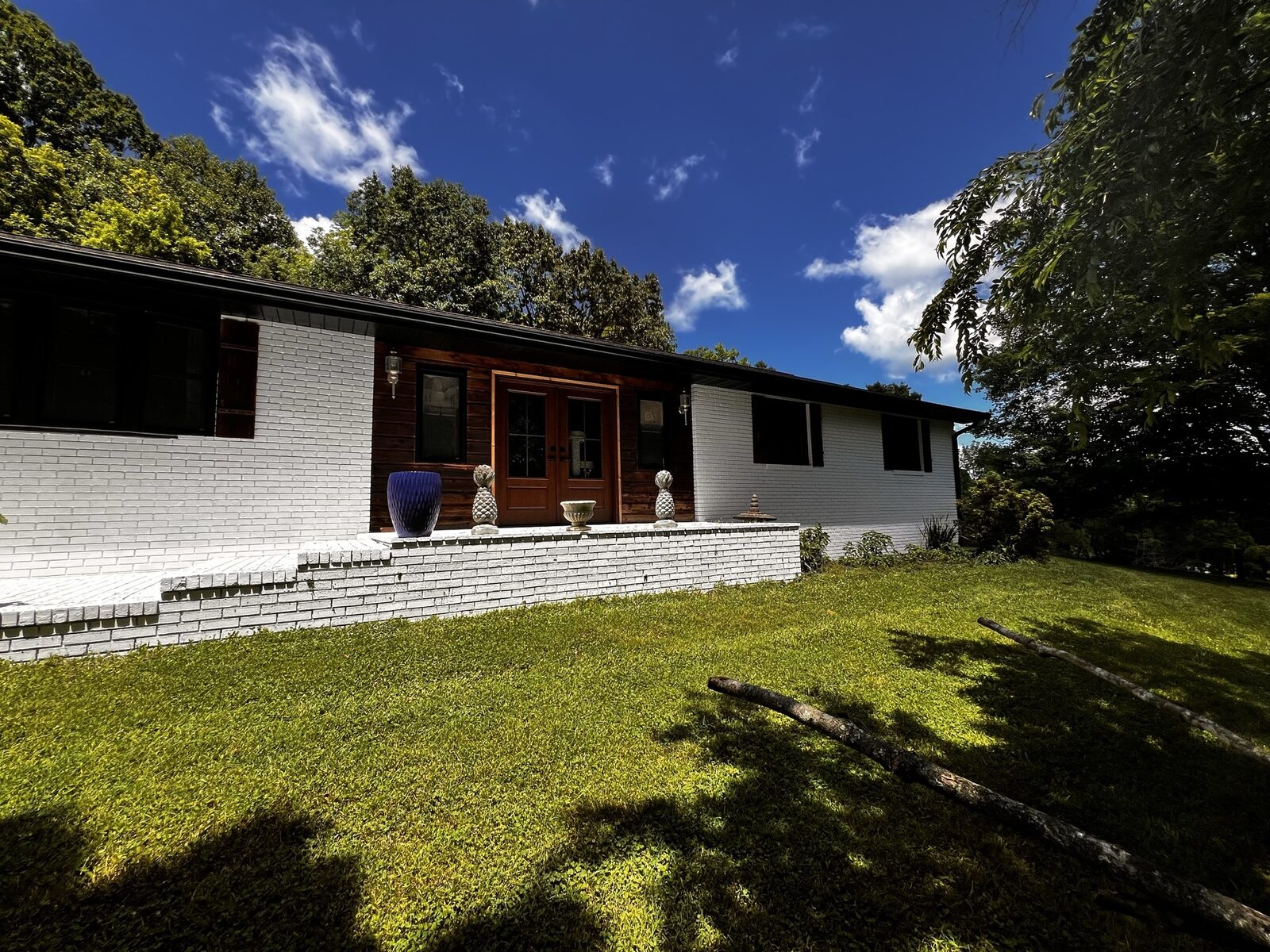
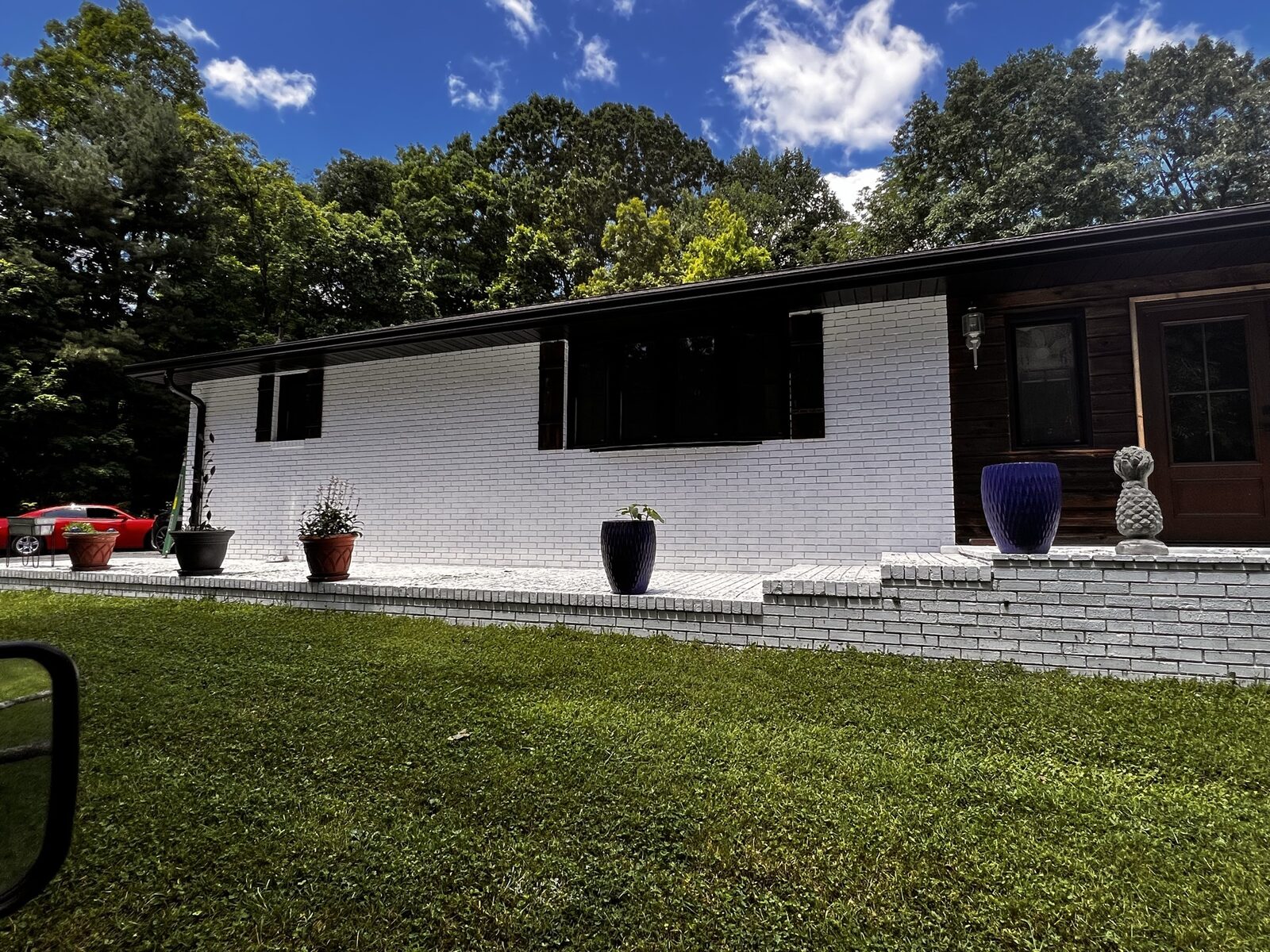
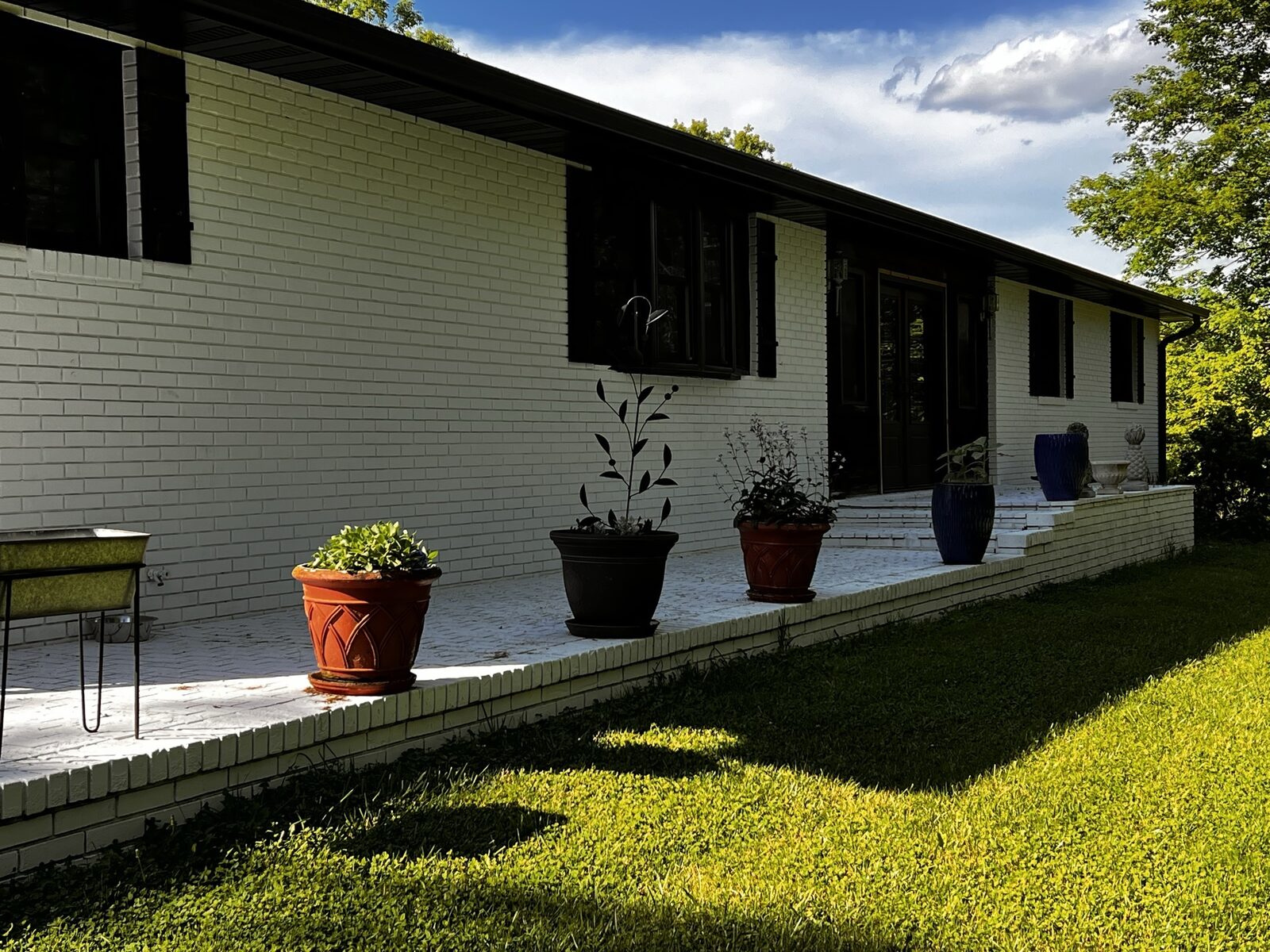
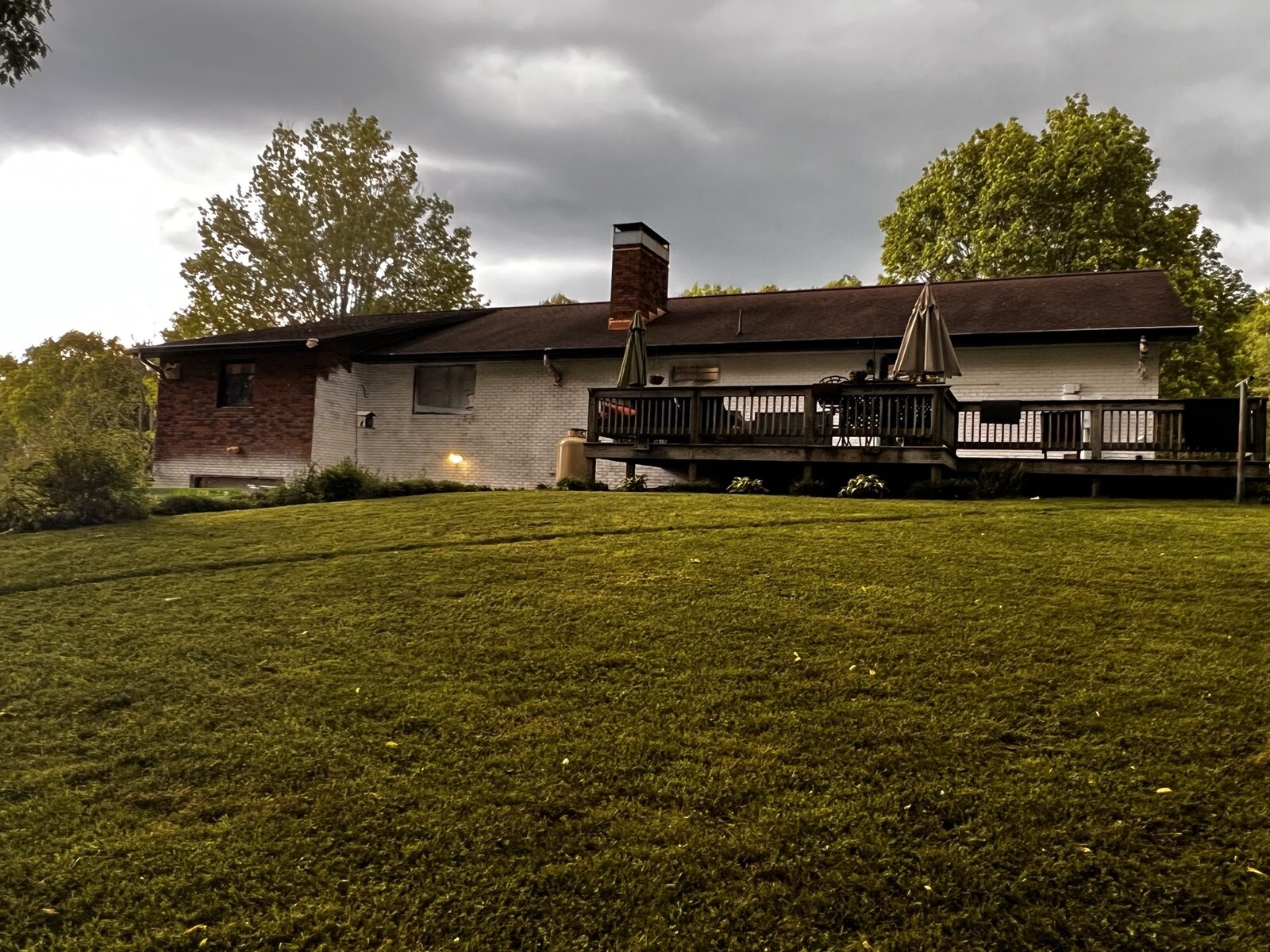
The transformation is what brick painting is supposed to look like. The brick texture is preserved — you can still see the joint pattern and the slight surface variation course to course — but the color is now a clean, modern, deliberate choice rather than the stock red from when the home was built. No film, no plastic-looking shine, no "painted brick" giveaway. Just brick that happens to be a different color now.
And Yes — The Chimney 😂
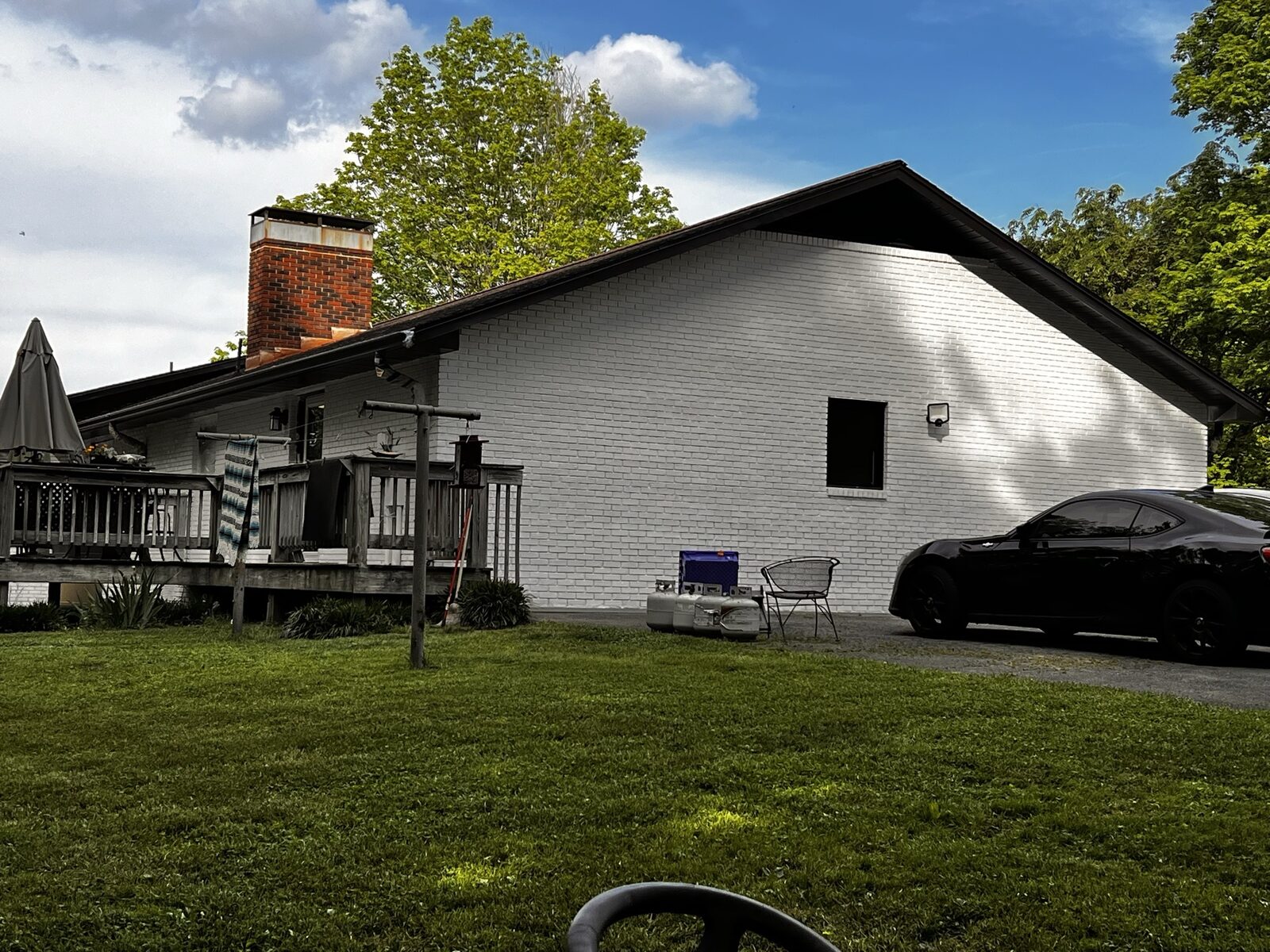
Yes, before you ask — we painted the chimney too. 😂 This shot was taken at the stage where we'd finished the main brick walls but hadn't pulled the lift around to handle the chimney yet. The chimney got the same Romabio Masonry Flat treatment in the next stage of the job. Posting it because someone always asks "but what about the chimney" on every painted-brick before-and-after, and we'd rather laugh about it than answer the same question 10 times.
Romabio at a Glance — TDS Quick Reference
- Product: Romabio Masonry Flat (potassium silicate mineral paint).
- Substrates (preferred): Unpainted, absorbent brick, stone, stucco. Also concrete, CMU block, hardie board, portland/gypsum stucco — with primer.
- Substrates to avoid: Floors, high-traffic areas, horizontal exterior surfaces. Previously painted masonry requires Romabio MicroGrip Primer first.
- Coverage: ~250–325 sq ft per gallon (1,000–1,300 sq ft per 15L pail).
- Application: Brush, roller, airless sprayer (0.019"–0.021" tip), or HVLP (1.4mm–1.5mm).
- Coats: Two on unpainted masonry; primer + two coats on previously painted.
- Sheen: Very flat / matte.
- Breathability: 300+ perm rating, non-film-forming.
- Warranty: 20-year limited warranty when applied per Romabio's specifications.
- Colors: 20+ curated colors plus custom tinting at independent retailers.
- Critical prep: Pressure wash and paint same day — masonry must be dampened before application.
When Romabio Is the Right Call (and When It Isn't)
Romabio is right for:
- Unpainted brick, stone, or stucco that's structurally sound
- Homeowners who want a long-term solution (20 years vs 5–7 with conventional masonry paint)
- Modern aesthetic — soft matte finish, brick texture preserved
- Older homes where breathability matters (preventing freeze-thaw spalling)
Romabio is not right for:
- Brick already painted with acrylic latex (requires Romabio MicroGrip Primer first; performance is best on virgin brick)
- Floors, patios, garage floors, or any high-traffic horizontal surface
- Brick that's actively spalling or has structural mortar issues — fix the brick first
- Customers who want a high-gloss or satin finish — Masonry Flat is exactly what its name says, very flat
For our complete take on mineral paints for brick — including how Romabio compares to Keim, the German silicate paint that started the category — see our Lime Wash & Mineral Paints for Brick: Romabio vs Keim guide.
Get a Brick Painting Estimate
Rock's Painting handles brick, stone, stucco, and other masonry painting projects across the Tri-Cities. We use both Romabio and Keim mineral paints regularly — they're both excellent and we'll match the product to the customer's preference, the specific substrate, and the color they want. If you're considering painting a brick home in Johnson City, Kingsport, Bristol, or surrounding communities, we'll come look at your specific brick, evaluate the prep needed, and give you an honest assessment.
Request your free brick painting quote or call (423) 207-2347.